I haven't sat down in more than twenty years.
I have a back problem. An old story. If I sit, the pain becomes unbearable, so I simply stopped doing it. I work standing, with the keyboard at chest height. I eat standing, a plate resting on a shelf. I hold meetings standing, and when I have to think for a long time I lie down on the floor of my office, while my students sit around me as if around a patient. Air travel, for me, is almost impossible — I'd have to lie down, and no one lets you lie down on a plane. So, for years, I stayed where I was. Still. In Toronto. Standing.
I'm telling you all this because, if you think about it, it's the perfect metaphor for my life.
I never sat down. Not in the body. And above all — not on the ideas. I spent forty years standing, defending something almost no one believed in. And for forty years they told me I was wrong.
In the end, I was right. But let me tell you one thing right away: being right, sometimes, is the most frightening thing that can happen to you.
My name is Geoffrey Everest Hinton.
That middle name — Everest — is no accident. Yes, it's that very mountain. George Everest, the man who measured the highest peak in the world and after whom the mountain was named, was a relative of mine. And he wasn't the only weight I carried in my name.
My great-great-grandmother was Mary Everest Boole. Her husband was George Boole — yes, that Boole. The man who invented the logic that today makes every computer on the planet work. Boolean logic. True, false. One, zero. My ancestor essentially wrote the alphabet of the machines that I, a century and a half later, would try to make intelligent.
And then there was Charles Howard Hinton, the mathematician obsessed with the fourth dimension. And my cousin Joan Hinton, one of the few women who worked on the Manhattan Project — on the atomic bomb.
Imagine growing up in a family like that. Where the least expected of you is to be a genius. My father was a renowned entomologist, a scholar of insects, and a very hard man. I remember he once told me, more or less: "Work hard, and maybe, when you're twice my age, you'll be half as good as me."
Not exactly the kind of line that helps you sleep peacefully. But I understood, a long time later, what he had taught me: that being good isn't enough. You have to be stubborn. In a family of giants, the only way to survive isn't to be smarter than them — it's to refuse to give up longer than anyone else.
I bore the name of a mountain, and I felt crushed at its feet. It took me half a century to understand that you don't carry a mountain on your shoulders. You climb it.
I went to Cambridge determined to understand the only thing that truly interested me: how the mind works. How a brain — a kilogram of gray matter, sealed in the dark of the skull — produces a thought. A memory. The sensation of red. Love. Fear. It seemed to me the greatest mystery in the universe, and we all had it inside our heads, and no one knew how to explain it. How can you not want to devote your life to this?
And here I began to become a problem. Because no discipline was enough for me. I started with physiology. It didn't explain the mind. I moved to philosophy. It didn't explain the mind. I moved to physics. Then to psychology. I changed departments the way others change their minds about lunch. I was convinced everyone was looking at the problem from the wrong side.
At a certain point I quit altogether. Seriously: I left the university and for a while I was a carpenter. I earned my living with my hands, building doors and shelves. I was a rather mediocre carpenter, if I'm honest. But even there, in the sawdust, I kept mulling over the only question that mattered to me: how does a brain think? In the end I understood that the wood would never tell me. And I went back, to building minds instead of furniture.
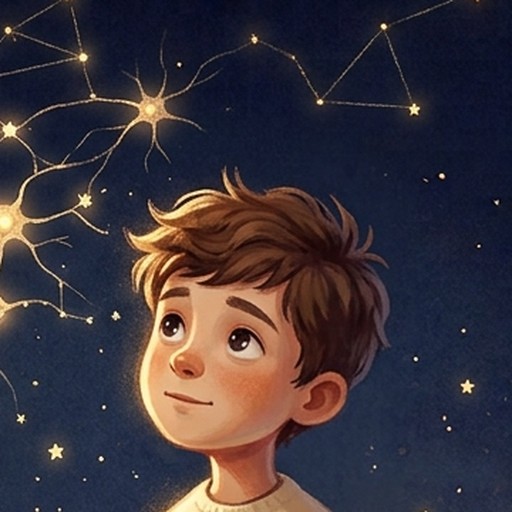
Because everyone wanted to explain intelligence with logic. With rules. With formal reasoning — the logic of my ancestor Boole, ironically. And I was more and more convinced it was a dead end. The brain is not a machine of rules. It's a network. Billions of tiny stupid cells — neurons — connected to each other, that learn by changing the strength of their connections. No one programs them. They learn on their own, from experience.
I wanted to build that. Not a computer you tell what to do. A machine that learns, the way a child learns. An artificial neural network.
There was only one small problem. In the world I lived in, that idea was considered dead. Buried. Ridiculous.
You have to understand what a desert I was walking into.
In the 1960s, a very authoritative man — Marvin Minsky, one of the founding fathers of artificial intelligence — had written a book that demonstrated the limits of those early neural networks. And the damage was done. For more than a decade, saying "neural networks" in a computer science department was like saying a curse word. The money went elsewhere. Careers were made elsewhere.
I did my PhD at Edinburgh on those networks. My supervisor didn't believe in them. He told me, kindly, that I was wasting my talent. Every few months he'd ask whether it wasn't time to work on something more serious.
I kept going. Standing.
Not because I was brave. But because I was certain. I looked at my own brain and I knew it worked that way. And if it worked for me, it could work for a machine. The problem wasn't the idea. The problem was that the world didn't yet have enough data, and enough computing power, to make it work. The right idea, in the wrong era.
I wasn't entirely alone, though. In the whole world we were perhaps a handful of people who still believed in it. We felt a bit like an underground sect. There was a Frenchman, Yann LeCun, who was teaching a network to read handwritten postal codes. There was a Canadian, Yoshua Bengio. We'd meet at conferences, where they put us in the smallest rooms, at the worst hours, while the big halls filled up for the fads of the moment. We looked at each other, the four of us, and told ourselves: they're all wrong. All wrong. And one day they'll understand.
Do you know what it means to keep a faith alight for decades, while the world pities you? It means learning not to need anyone's approval. At a certain point you stop waiting for them to agree with you. It's enough to know, inside, that you're right.
Then I made a choice that changed my life, and perhaps history.
I was in the United States. And in America, in those years, most of the research on artificial intelligence was paid for by the military. By the Pentagon. And I didn't want my work — understanding the mind, this wonderful thing — to end up inside a weapon. I couldn't make peace with it.
So I left. I went north, to Canada. To Toronto. To the cold.
And Canada did something the establishment had never done: it believed me. A Canadian institution, CIFAR, decided to fund that small group of stubborn people still working on neural networks, in the middle of the artificial intelligence winter. We were very few in the world. We felt a bit like a sect. But at last I had a place where I could stand in peace.
In 1986, with David Rumelhart and Ronald Williams, we published in Nature the work on a technique called backpropagation. Let me try to explain it in simple words, because it's more beautiful than it sounds. Imagine a network that at first is completely stupid: you show it a photo of a dog and it guesses "truck." Wrong. So the error travels back through the whole network, like a wave, and every single connection is nudged to change a little, in the direction that will make it a bit less wrong next time. It fails, it corrects. It fails, it corrects. Millions of times. Until it learns. We didn't tell it what a dog is. We taught it to learn what a dog is. Exactly the way a child does.
It's the seed of almost everything we call artificial intelligence today.
It was 1986. I had the right intuition, I had the right method. I was only missing two things: mountains of data, and machines fast enough. They didn't exist yet. So my seed stayed in the ground, in the cold, for twenty-six years. And I stayed there guarding it. Standing.
And in those twenty-six years, while I waited for the world to agree with me, life took almost everything from me.
My wife Ros — the woman I shared my life with — fell ill. Ovarian cancer. She died in 1994. She left me with two small children to raise, alone, while I kept chasing an idea that almost no one still thought was valid.
I remarried, a few years later. Jackie. And for a while the light came back. Then, in 2018, Jackie too fell ill. Pancreatic cancer. And she left as well.
I spent my life studying how the mind works. How thought is born, memory, consciousness. And meanwhile I watched two people I loved being erased, one neuron at a time, by a disease I didn't understand and couldn't stop. There is a cruelty in this that I have never managed to explain to myself. Not even with all the science in the world.
But I didn't sit down. I couldn't. Partly because my back wouldn't allow it. And partly because the work was the only thing keeping me on my feet.
And then came 2012.
In my lab in Toronto I had two extraordinary students. One was named Alex Krizhevsky: a wizard of programming, able to squeeze every last drop of power out of a graphics card. The other — remember this name, because it will come back — was named Ilya Sutskever.
Ilya was different from anyone I had known. A young man with an almost prophetic intuition. He knocked on my door years earlier, one summer, asking to work with me; I gave him some papers to read and he came back not with questions, but with objections — about why we weren't thinking big enough. He had the physical, visceral conviction that neural networks, if only we made them big enough and gave them enough data, could do anything. It wasn't academic caution. It was a kind of faith. And he was the one who was right.
There was a competition, in those years. It had been created by a young professor whose tale you may already have heard, in this series: Fei-Fei Li. She had built a gigantic archive of images, millions of photos labeled by hand. She called it ImageNet. And she challenged the world to build a machine capable of recognizing what was in those images.
For two years, the best labs on the planet had tried with traditional methods. Mediocre results.
I told my boys: let's try it with a neural network. The thing everyone has been calling dead for forty years.
And here the miracle happened. Because at last the two things I had lacked my whole life were there. There was the data — Fei-Fei's millions of images. And there was the computing power. Alex built our network on two graphics cards. Two simple videogame cards. They were made by a company you'll hear about later, in this same series: Nvidia. Jensen Huang's cards. Bought in a store, for a few hundred dollars.
Fei-Fei's data. Jensen's cards. My neural networks. Three lives that had never met, that had each crossed their own desert — and that, in one night, on a computer in Toronto, came together.
Alex worked on that network for weeks, shut in at home, pushing those two cards to the limit day and night — they overheated, they buzzed, while they learned to tell a dog from a wolf, a ship from a church. And when the results came, at first we almost didn't believe them.
Our network was called AlexNet. And it didn't win that competition. It crushed it. An enormous leap, never seen before. The others, with traditional methods, always stopped at the same wall. We broke through it. The machine, for the first time, saw almost like a human being.
Forty years. Forty years in which they'd told me I was wasting my talent. Forty years standing, on the margins, defending a mocked idea. The skeptical supervisor. The denied funding. The winters. And in a single night, all of it turned over.
It wasn't just my vindication. It was the vindication of everyone who had believed when it wasn't convenient. Of those who stay standing when it's easier to sit down.
The world, which for decades had ignored me, suddenly wanted all of me.
With Alex and Ilya we founded a tiny company. We gave it a technical name, DNNresearch. It had no products. It had no plans for products. It didn't even have an office. It had only the three of us and our idea.
And the biggest companies on the planet — Google, Microsoft, Baidu, London's DeepMind — set out to bid for us. A real auction, rising, to grab three people and an idea that twenty years earlier wouldn't have been worth a coffee. We ran it by email, from a hotel room, watching the figure climb hour after hour. Million after million. At a certain point it reached forty-four million dollars — and there I decided to stop it. Not because it wasn't still rising. But because I wanted to choose who to work for, not just for how much money. We went to Google.
Forty-four million. For the idea my supervisor had begged me to abandon.
A few years later they gave me the most important prize in computer science, the Turing Award, together with two friends who had held firm with me in the desert — Yann LeCun and Yoshua Bengio. The papers began to call us "the godfathers of artificial intelligence."
The godfather. For a man who for half his life had been considered a likable dreamer, not bad.
I could have sat down, at that point. Metaphorically, I mean. Enjoyed the vindication. Played the revered wise old man.
And instead, from the summit of that mountain I carry in my name, I looked down. And for the first time I was afraid.
Because the more we built these machines, the better they got. Better, in certain things, than I had ever dared to hope. And I began to ask myself something I had never asked in forty years of optimism: what if it worked too well?
I had spent my life trying to build an artificial mind, believing that, to understand ourselves, we had to recreate ourselves. And suddenly I realized we might be building something that one day would become more intelligent than us. And that, at that point, it's by no means certain we remain the ones in charge.
Let me tell you why it frightens me. It's not the science fiction, the robots marching in the streets. It's something more subtle.
Take you and me. We learn slowly, and when we die, almost everything we knew dies with us. I can't pour forty years of my experience into your brain. I can only try to tell it to you, in words, slowly, hoping something gets through. Machines, no. When a thousand copies of the same artificial intelligence learn a thousand different things, in an instant they can share them all, with each other, perfectly. It's as if one man could instantly know everything ten thousand men know. No human being will ever be able to compete with a thing that learns like that.
And then there's the use we make of them. I'm not only afraid of the machines. I'm afraid of the people who will use them to manipulate elections, to wage war, to tell millions of people exactly the lie they're most willing to believe. The same technology that can read an X-ray better than a doctor can also build the most powerful weapon of persuasion in history.
I spent my life wanting this thing to work. Now my nightmare is that it works too well, in the wrong hands — or with no hand in charge at all.
And here, you know, I've often thought back to a woman in my family. I named her to you, at the start: my cousin Joan Hinton. One of the few women physicists on the Manhattan Project. She worked on the atomic bomb, young, brilliant, convinced she was on the right side of history. Then she saw Hiroshima. And she spent the whole rest of her very long life regretting it, fighting against the weapons she had helped create.
I didn't think, as a boy, that I would understand my cousin so well. That I too would come to know that exact feeling: the pride of having built something great, and the chill, right after, of no longer being sure what you've brought into the world. In my family there are those who gave the world the logic of computers, and those who gave it the bomb. And now there's me. I'm beginning to think the Hintons have a dangerous talent: building things too powerful for the use humanity will manage to make of them.
I don't want to be remembered as the man who kept quiet.
In May 2023 I did the hardest thing of my career. I left Google. Not because Google had done anything wrong — on the contrary, it had behaved responsibly. I left because I wanted to be free to tell the world that I was afraid. Without having to think about how it might harm the company I worked for.
The man who had spent forty years building this thing now traveled the world to warn of its dangers. The same stubbornness. The opposite direction.
And I wasn't the only one. A man who came from the world opposite to mine — not an academic bent over a blackboard, but a builder of rockets and cars — had been shouting the same alarm for years, in rougher words than mine. Of him you'll hear the last tale in this series: Elon Musk.
And then, in October 2024, the phone rang.
I was in a cheap motel, in California. I had a problem — my back, always it — and that morning I was supposed to get an MRI. The phone rang with a strange area code. It was Stockholm.
The Nobel Prize. In physics. To me, and to another pioneer, John Hopfield. For neural networks. For the thing that for half my life they'd told me to drop.
They said I was "stunned." It's true. I canceled the MRI. A Nobel Prize gives you a good excuse to skip an MRI.
But when the journalists asked me how I felt, I couldn't put on the face of a happy man. I told the truth. I said: "Under the same conditions, I would do it all exactly the same. But I fear the consequence of all this could be machines more intelligent than us, that in the end take control."
Can you believe it? The most triumphant day of my life. The total, cosmic vindication of forty years of mockery. And instead of celebrating, I was warning the world to watch out for what I had built.
This is what no one tells you, about vindication. That sometimes you get it. And you discover that the greatest prize is also the heaviest burden.
I told you, at the start, that I haven't sat down in twenty years.
Now perhaps you understand why it's the metaphor of my life.
I didn't sit down when everyone told me neural networks were dead. I didn't sit down when I lost Ros, and then Jackie, and had to keep standing for my children and for an idea. I didn't sit down when the world, all at once, decided I had always been right and covered me with prizes.
And I won't sit down now. Now, when it would be time to rest, to enjoy the Nobel as a wise old man. No. I'm standing to tell all of you: be careful. This thing we've lit is wonderful and can cure us of the diseases that took from me the ones I loved. But it's also the most powerful thing our species has ever built. And we don't yet know whether we'll manage to stay in charge of it.
I bear the name of a mountain. I've spent my life climbing it. And from the summit, now, I'm not shouting to you "I made it."
I'm shouting to you to watch carefully where you put your feet.
Because I am not a lone genius. None of us ever was. It took a girl who labeled images. A man who built cards for videogames. Two students in Toronto — and one of them, Ilya, would later go on to found a small company called OpenAI, and would bring all of this into your homes.
We are a constellation. Many distant lights, each of which has crossed its own dark. And now that, all together, we light up the sky —
— the most important thing is not to blind ourselves.
My name is Geoffrey Hinton.
And I remain standing.
Sources: Cade Metz, «Genius Makers» (2021); Nobel Lecture in Physics 2024 (Geoffrey Hinton & John Hopfield); interviews given by Hinton after leaving Google (May 2023) and after the Nobel (October 2024).