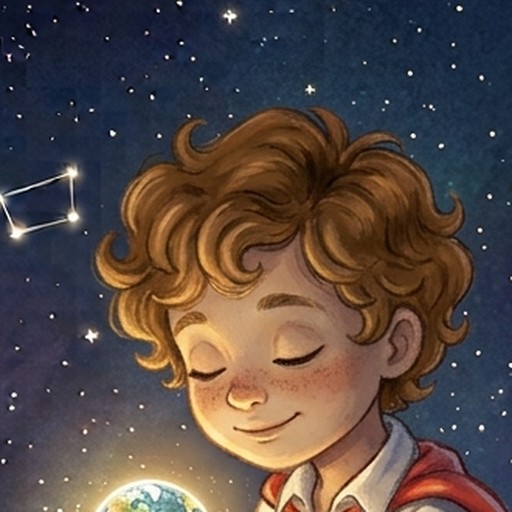
I want to tell you about fire.
Not the fire of rockets. We'll get to that. The first fire I knew was another one. It burned inside, and pain lit it in me.
I was twelve when they sent me to a thing that in Afrikaans is called veldskool. "School of the veld," a survival school. It sounds like a field trip. It was a paramilitary camp, like Lord of the Flies. They gave you little water and little food, and they encouraged you to fight the other children to grab it. Bullying, there, was considered a virtue. The bigger boys quickly learned to punch the smaller ones and steal their rations.
I was short. I was awkward. I was the perfect target. They beat me up more than once. I lost four kilos in a few days.
Every two or three years, in those camps, a child died. And the group leaders told it as a warning. They said: "Don't be stupid like that idiot who died last year."
There. That was the world I grew up in. South Africa in the eighties. A place where violence was the air you breathed.
And then there was home.
I won't tell you everything about my father. He was a brilliant engineer, and a man with two faces. One minute he was cheerful, witty — he'd suggest getting on the motorcycle and going for a ride. The next minute he became someone else: he'd stand you in front of him, motionless, and lecture you for two, three hours straight, explaining in detail how worthless you were, how pathetic. And you couldn't leave. You just had to stand there, and take the contempt.
At ten I chose myself to go live with him. He seemed lonely to me, and I felt I had to keep him company. It's the decision I've regretted the longest, in my whole life.
Because when you grow up inside a fire like that, a part of that fire enters you. And all my life I've had a secret fear, greater than the fear of any machine: the fear of becoming him. Of having, inside, the same demon. Keep this word in mind — demon. Because it will come back. And it won't speak only of me.
At six, a guard dog bit me while I was running down the driveway. At the emergency room, before stitching me up, my mother had to convince me that the dog would not be punished. Can you believe it? I was the one who'd been bitten, and I was worried about the dog. I took everything literally. People would say one thing and I understood exactly that. Only much later, reading books, did I discover that human beings almost never say what they really mean. They've told me it's a form of Asperger's. Maybe. All I know is that precise languages — physics, engineering, code — never betrayed me. People did.
At a certain point, as a kid, I asked myself the wrong question in the wrong way. I began to wonder what the meaning of life was, of the universe, of everything. And I made the classic mistake of the depressed adolescent: I read Nietzsche, Schopenhauer, Heidegger. Don't read Nietzsche at fifteen. It doesn't help. My confusion turned into despair.
Science fiction saved me.
I rummaged through the whole science-fiction section of the library, then convinced the librarians to order more. And among those books I found something that put me back on my feet. In one story — The Hitchhiker's Guide to the Galaxy — a supercomputer spends millions of years calculating the answer to the meaning of everything. And the answer is: forty-two. A number. Absurd. Why? Because no one had understood what the question was.
That changed me. I understood that the hard part isn't finding the answers. It's formulating the right questions. And that if you want to broaden the possible answers, you have to broaden consciousness — intelligence, knowledge, the reach of life in the universe. From then on I had one compass only: to do the things that, for me, made the future of humanity bigger, not smaller.
Then a machine came.
I set aside the money from odd jobs and bought myself a small computer, a Commodore. It came with a programming course: sixty hours of lessons. I did it in three days, almost without sleeping.
And at thirteen I wrote a videogame. I called it Blastar. A hundred and twenty-three lines of code. A magazine published it and paid me five hundred dollars — a fortune, for me.
Do you want to know what the game was about? You had to destroy an alien cargo ship. A spaceship carrying hydrogen bombs and "death-ray machines."
Thirteen years old. And I was already programming a boy who defends the Earth from an alien threat coming from the sky.
Keep this game in mind. Because my whole life, if I look at it now, has been Blastar. I've spent my existence staring at the horizon looking for the next cargo of bombs. And building the way to stop it.
As an adult I reduced it all to a list. I asked myself which things would truly change the destiny of our species. Three came to mind: the internet, sustainable energy, and life among the stars.
To the first two I've devoted companies you may know. But it's the third that has to do with fire.
I built rockets. Because I had in my head a simple and terrible thought: that human consciousness is a little flame lit on a single planet, in a huge and dark universe. It only takes an asteroid, a war, a mistake — and it goes out. Forever. I wanted us to become a multiplanetary species. I wanted to take that little flame and carry it elsewhere, so that it couldn't all go out at once.
Do you know how it really began? With an embarrassment. My first plan wasn't even to build rockets. I only wanted to send a small greenhouse to Mars, to grow some green plants and send home a photo of them — to rekindle in people the dream of space. I needed a cheap rocket. And the only place to find one, in 2001, seemed to be Russia.
So I flew to Moscow to buy some old ballistic missiles. Yes, you heard right. I went shopping for intercontinental missiles. The meetings were surreal. Rivers of vodka: at one point I passed out and banged my head on the table. At another, a Russian general with a missing tooth spat on me every time he shouted. And when I explained that I wanted to make humanity multiplanetary, he got agitated: "This rocket wasn't built so that some capitalists could run their bullshit missions to Mars!" And then — literally — he spat on me.
In the end they laughed in my face. At every meeting they raised the price. "Hey, little boy," they told me, "you don't have all this money, do you?"
And it was the best thing that could have happened to me. Because when I get angry, I do one thing only: I take the problem apart down to the bricks. On the flight back I opened a spreadsheet and started writing down how much the materials of a rocket really cost — the aluminum, the titanium, the fuel, the carbon. It came out that the raw material was about two percent of the price of a finished rocket. Two percent. All the rest was just the stupid way we built them.
And there I understood. I didn't have to buy a rocket. I had to build it. From scratch. Better, and for a fraction of the cost. That's how I've reasoned my whole life, about everything: don't start from how it's always been done. Start from the laws of physics, and work up.
A rocket is controlling an explosion. It's holding fire in your hand without getting incinerated.
And that fire nearly incinerated me for real. There was a year — 2008 — that was the worst of my life. My first three rockets had exploded, one after another. My electric car company was running out of money, in the middle of a global crisis. I was getting divorced. I was left with the last money I owned in the world — and it wasn't enough to save both companies.
At night I screamed in my sleep. I woke up clinging to whoever slept beside me. I'd go to the bathroom to throw up from stress, and someone would hold my head over the bowl. My friends told me: choose. Save one, let the other die. It was the rational move.
I said no. I said it was like having two children and little food: you can divide it, and risk losing them both, or give it all to one. But I couldn't decide which child to let die. So I chose to spend every drop to save both.
And then the impossible happened. The fourth rocket — the last I could afford, I didn't have the money for another — lifted off the ground on a column of flame, and didn't explode. It reached orbit. It was September twenty-eighth, 2008. A few months later, just before Christmas, a NASA contract saved the space company. And on Christmas Eve, at the last usable second, we closed the funding that saved the car company.
Two companies, both hours from the end, both pulled out of the fire in the same December. Since then I know one thing, about myself. That I don't fear fire. I ride it.
And this makes what I'm about to tell you even stranger. Because there is one fire in the world that I have truly been afraid of.
Artificial intelligence.
Let me tell you how it began. In 2012, at a conference, I met a man. A former chess prodigy, gentle in manner, with behind him a mind as competitive as few others. If you've followed this constellation, you've already heard his tale: it's the last one, before mine. His name is Demis Hassabis, and he was building in London a company to create a general artificial mind. He called it DeepMind.
He came to visit me at my rocket factory. We sat in the cafeteria, overlooking the assembly lines, and I explained to him why I built ships for Mars: to save human consciousness, in case of catastrophe. And he, calmly, added an item to my list of catastrophes. One I hadn't considered. He said: machines could become more intelligent than us. And one day decide to get rid of us.
I stayed silent for almost a minute. It happens to me: I stop, and inside I run the simulations — I see the years scrolling by, the branches opening up, the outcomes. And in that minute I saw that he could be right. I invested five million dollars in DeepMind. Not to profit. To keep my eyes open. To be inside the room where the fire was being lit.
There was another man, in those years, whom I loved like a brother. Larry Page, the founder of Google. I slept at his house. We spent nights talking. And I, obsessively, always brought up the same subject: the safety of artificial intelligence. He was skeptical.
At my birthday party, in Napa Valley, in front of the guests, we started to argue. Furiously. I said: if we don't put in protections, these machines could replace us. Make our species irrelevant. Or extinguish it.
And he answered me with a word that closed our friendship forever. He called me a speciesist. Someone with a bias in favor of his own species. Like a racist, but for humans.
I told him: "Well, yes. I'm in favor of human beings. I like humanity a whole lot."
Go ahead and laugh. But think about it for a moment. The founder of one of the most powerful companies in the world, the company that was about to own DeepMind, looked at me as if it were a moral flaw that I cared about our species more than about the machines we were building. That was when I truly got scared. Not of the machines. Of the men who were building them without being afraid.
I tried to stop Google from buying DeepMind. I failed: the acquisition went through. They set up a fake "safety council" to calm me, with me on it. It met exactly once. I understood it was a mockery — that those gentlemen had not the slightest intention of limiting their own power.
So I did the only thing I know how to do when I'm afraid of something. I don't run away. I run toward the fire.
In 2015, at a dinner, I decided with another man to found a laboratory that would be the exact opposite: open, non-profit, with the research given away to the world. The idea was a kind of "Linux version" of artificial intelligence — not in the hands of a single company, but of everyone. Because the best defense, I thought, was that this power not be concentrated in a few.
We called it OpenAI.
The man I founded it with you know well: his tale, in this series, is that of the boy who was looking for a safe place. Sam Altman. And for scientific director we took away from Google their best brain — a researcher with a prophetic gaze, whom both Geoffrey Hinton and Sam have already told you about: Ilya Sutskever. The same Ilya who had been Hinton's student in Toronto, the night the neural networks came back to life.
Larry Page flew into a rage. Not only had his friend created a rival laboratory — I had also stolen his best scientist. Since then, we've barely spoken. I would tell him: "Larry, if you hadn't been so indifferent about AI safety, there would have been no need for a force to act as a counterweight to you."
For years I traveled the world playing Cassandra. I said that artificial intelligence was, probably, the greatest existential threat to our species. I said that building it without caution was like summoning a demon: in all the stories there's the guy with the pentagram and the holy water, sure he can control it — and it never works.
And I said the sentence that has stuck to me most of all. If we build something much more intelligent than us, and we don't keep it aligned to human will, we could become, in the best case, its pets.
I don't want to be a machine's house cat.
And here comes the part that no one understands about me. Because I, the man who was most afraid of all of this fire… kept lighting more of it.
I even put real flamethrowers up for sale. I moved twenty thousand of them in a few days, for fun. The child terrified of fire who ends up selling it door to door. If you're looking for a metaphor for my life, it's all right there.
But seriously. I founded a company to put chips in the human brain — Neuralink — with a precise idea: if you can't beat the machines, merge with them, keep them tied to your will. I filled my cars with neural networks that learn to drive by watching millions of images of the real world.
And let me tell you who's at the origin of those cars that learn to see. There's the girl from the first tale of this constellation — Fei-Fei Li — who first taught the eyes of machines to open, gathering by hand millions of images so that a computer would learn to recognize the world. Without the sight she wrenched from the dark, my cars would be blind. Can you believe it? My dream of cars that drive themselves rests on the patient work of a woman who, on the other side of the country, counted cats and airplanes in millions of photographs.
I built supercomputers to train those minds. And in the end, when the AI I feared exploded across the world, I didn't just stand and watch: I created my own. My team, my models.
And don't think I always control this fire. It burns my hands constantly. When some kids got trapped in a flooded cave in Thailand, in a few hours I had my engineers build a mini-submarine, and I flew down there at night, with the lamp on my forehead, into the dark cave, in water up to my waist. I really wanted to save them. Then one of the experts on the scene called me a clown seeking attention — and I lost my head, and insulted him in front of the whole world, in a way I'm still ashamed of. There's the demon. It jumps out at the very instant I think I'm doing the most right thing.
And a few years later I bought the most talked-about social network on the planet for forty-four billion dollars — largely because they had made me angry. The day I took possession of the headquarters, I showed up carrying a sink in my arms. In English "come to terms with it" is let that sink in — and sink means washbasin. I found the pun irresistible. Then I fired half the company and ended up sleeping in the office. Genius and self-destruction, with me, come out of the same tap.
There was a period, between 2017 and 2018, worse even than 2008. Eighteen months of relentless madness, the most concentrated pain I've ever felt. One day they found me lying on the floor of the meeting room, in the dark, unable to get up for a phone call with the Wall Street analysts. A colleague came to lie down beside me, in the corner, to convince me to talk. The rocket builder, the man who wanted to save the human species, on the ground in the dark like that ten-year-old boy. That was the home demon presenting the bill. That's why, when I talk about the danger of summoning demons made of code, it's not theory. It's the only thing I'm really an expert in: living with something stronger than you, inside your own house, and trying not to let it destroy you.
Because this is the trap of fire. Once you know that someone else is lighting it, you can't afford to be the only one in the dark. And so the one who is most afraid of the blaze ends up running to build the biggest flamethrower. I told myself it was to align the AI, to make it safe, not to leave it to the Larry Pages of the world. And in part it's true. But the honest truth is more uncomfortable: I can no longer tell where the fear ends and where the desire to win begins.
And there's a detail that closes a circle in this constellation. All these machines — mine, Sam's, Demis's — think thanks to a single kind of chip. The graphics cards born for videogames. I've bought them by the tens of thousands, all at once, to build my artificial brains. They're made by the man whose tale has already been told to you: Jensen Huang. The boy who cleaned toilets and ended up selling the brain of AI to anyone who wanted to build it. Me included.
Can you believe it? The child who at thirteen programmed Blastar on a card for playing, today buys the same cards — grown up — to train the minds that keep him awake at night.
At the end of 2022, the thing I had feared for ten years arrived. Not with a roar. With a chatbot. Sam released ChatGPT, and in two months the whole world wanted artificial intelligence. The fire I had helped to light by founding OpenAI — and from which I had then walked away — now burned in every home.
And I found myself doing what I always do. Watching it burn, split in two: one half terrified, the other thinking I should have been the one holding that match.
I'm not the only one to have had this fear, in this constellation. There's a man who lit the fire for real, with his own hands, for forty years — and then, having reached the top, got scared of what he had built, and left everything to be able to tell the world. You've heard his tale: Geoffrey Hinton. The godfather of neural networks, who on the day of his Nobel, instead of celebrating, warned humanity.
He and I come from opposite worlds. But in the end we found ourselves saying the same thing, standing, while the others celebrated: be careful what you're lighting.
And there's one last thought that keeps me awake, and that brings everything back to the beginning. To Blastar.
I believe — seriously — that it's very probable that this reality we're living in is a simulation. A videogame, run by an intelligence superior to ours. Notice this: forty years ago we had Pong, two dashes and a dot. Today we have photorealistic worlds in which millions of people live. If progress continues even just a little, we'll become indistinguishable from reality. And then the question is: how do we know it hasn't already happened? That it isn't us who are the characters inside someone else's game?
I don't find it depressing. I find it a hope. Because if we're inside a game, it means civilization got far enough along to build it. It means we made it.
I told you about fire, at the start.
There's an ancient myth. Prometheus steals fire from the gods and gives it to men. And for this he is chained to a rock, forever, while an eagle devours his liver every day. Because fire is the most beautiful and most dangerous thing that has ever been given to us. It warms us. It cooks our food. It lights the dark. And it can burn everything.
Artificial intelligence is the Promethean fire of our generation. We've stolen it. We hold it in our hands. And now we have to decide whether it will warm us or incinerate us — knowing that we can no longer give it back.
I am the child who was taught, by way of beatings in a survival camp, that the world is dangerous and that only those who don't go out survive. I'm the boy who at thirteen played at defending the Earth from a cargo of bombs fallen from the sky. I've spent my life looking for that cargo in the real sky. And I think I've found it — except it doesn't come from space. We built it ourselves.
I am not a lone genius. None of us is. It took a girl who labeled images, a stubborn old man standing for twenty years, a man who sold gaming cards, a boy looking for a safe place, a child who played to understand the universe. And me — the child who played at saving it, the world. We are a constellation. And the fire we've lit, all together, now lights up the sky.
The only thing that matters, now, is not to burn ourselves.
My name is Elon Musk.
And I'm still damned afraid of the dark.
Source: Walter Isaacson, «Elon Musk» (2023).